 Light-emitting diodes (LEDs) are a relatively old technology (1970s) that has advanced from use in numeric displays and indicator lights to a range of new and potential new applications, including exit signs, accent lights, task lights, traffic lights, signage, wall sconces, outdoor lighting and down lighting.
Implementing LED lighting technology is more involved than finding the latest and greatest LED. LED lighting systems are comprised of multiple subsystems: LEDs, LED drivers, thermal management, and optics; each interacting with the other to affect the system’s overall performance.
Advantages of LED Lighting
- Energy Efficiency - LEDs are highly efficient. Various estimates of potential energy savings range from 82% to 93%.
- Long Life - LEDs are projected to produce a long service life of about 100,000 hours. For this reason LEDs are ideal for hard-to-reach/maintain fixtures. LED bulbs last up to 10 times as long as compact fluorescents, and far longer than typical incandescent.
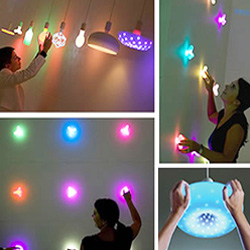
- Range of Colors - LEDs are available in a range of colors like red, blue, green, amber and white.
- No UV Emissions/ Little Infrared - LEDs produce no UV radiation and little heat, making them ideal for illuminating objects, such as works of art, that are sensitive to UV light.
- Durable - LEDs are highly rugged. They feature no filament that can be damaged due to shock and vibrations.
- Small Size/ Design Flexibility - A single LED is very small and produces little light overall. However, this weakness is actually its strength. LEDs can be combined in any shape to produce desired lumen packages as per design goals.
Other Benefits
- Mercury free
- Lights instantly
- Can be easily dimmed
- Silent operation
- Low-voltage power supply (increased safety)
